The first model released by can-am was the MX. Aimed at the emerging motocross market of the early ’70′s. First released in 1973 in 125 and 175 variations, a 250 was added in early 1974.
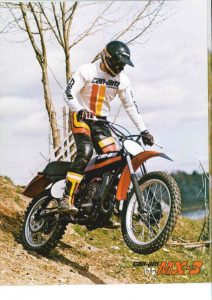
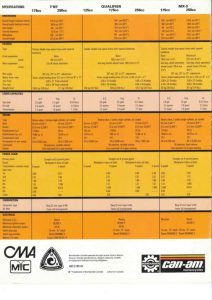
In late 1976, can-am released an updated model to their successful MX and TnT which attempted to capitalise on their competition success. This second series MX bike – the MX-3 included key developments in suspension, with can-am following the trend with laid down shocks and greater fork travel. Marzocchi forks replaced the Betor at the front, with an extended swing arm at the rear, improved overall suspension travel.
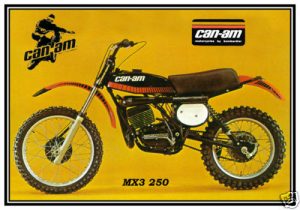
The 250 model of the MX-3 was known as the Black Widow. The bike produced over 35bhp, with the small tubular frame and swing arm struggling to handle the power. Produced for a single year, it remains one the most sought after collector models.
Models generally progressed with the MX 4 and MX 5, with the latter becoming the third series of dirt bikes.
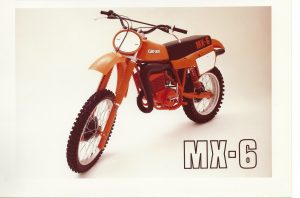
In 1980 Cycle World magazine chose the MX6 as their 250 bike of the year, stating: “With the 250 MX-6, can-am has done more than hold their own against the market leaders. Yellow, red and green machines may dominate motocross start lines across the country–and maybe even finish lines–but not because they hold a performance advantage on the can-am . The MX-6 has the best engine in it’s class; It handles as well as any of the competitors and better than most. It’s blemishes are few, the most serious being its tender clutch. If you decide to go with the orange machine, it will be an act of defiance, but it will be calculated act with a predictable result: Winning”
 The one thing that can-am ’s are characterised for are their power coupled with vague controls. This was summarised by Popular Cycling when reviewing the MX-2 giving the bike 10/10 for power, powerband and acceleration, and a further 10/10 for general handling, but limited the scores to 4/10 for suspension, braking and rider comfort.
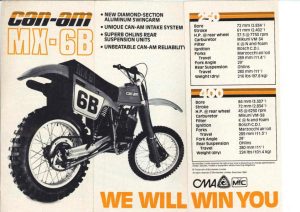
The last MX model was the MX-6B - although pictures exist if an MX7 no known examples exist. Largely an update of the MX-6, the B model was developed in late 1982 just as can-am was coming to an end in Quebec and transferring to England under Armstrong/CCM. It was never put into production and very few examples of the bike are known to exist.
 The Legend of the Black Widow
The MX-3 250 is known as the Black Widow, but you won’t find that name on any sales brochures. The reason why goes something like this:
The MX-3 was produced at a time when the thought of making bikes was already starting to wane at Bombardier. The bike was built on limited budget, as Bombardier had refused to invest the money in a new chassis. Laying the shocks down has already been tried by other makes and in a desperate try to keep up with the ‘70’s suspension chassis race, can-am followed suit.
In the early test stages Jeff Smith reportedly looped the bike and refused to ride it. Jimmy Ellis tried and after a hair raising practice session in which a spectator was serious hurt, declared the bike “a black widow” – meaning it was lethal. Unfortunately the French Canadians took the declaration as a seal of approval (assuming Jimmy meant the word as an antonym) and commissioned special decals for the rear fender. But the American dealers took exception to them and stripped off the decals, with Bombardier being forced to issue a recall notice to remove them.
But by then, the name had stuck. The Black Widow is now the most desirable of any collection. And yes it’s still as lethal to ride!
A special version of the MX3 was sold for desert racing on a limited race availability. See Oddballs for more details .
MX 1
| Year | Frame No | Bike Reference | No's Produced | Rotax Engine | Gearbox |
| 1973 Models | 3843 | 125 MX-1 | 750 -1500 | 124 short stroke oil injected | 6 speed wide ratio |
| 3853 | 175 MX-1 | 750 -1500 | 174 short stroke oil injected | 6 speed wide ratio | |
| 1974 Models | 4843 | 125 MX-1 | 1500-2500 | 124 short stroke oil injected | 6 speed wide ratio |
| 4853 | 175 MX-1 | 1500-2500 | 174 short stroke oil injected | 6 speed wide ratio |
| 1975 Models | 5863 | 250 MX-1 | 750 -1500 | 244 short stroke oil injected | 5 speed close ratio |

1973 can-am commenced production of the 125 and 175 models
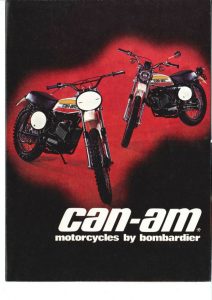


MX 1 Brochure (French)
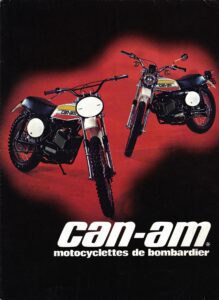
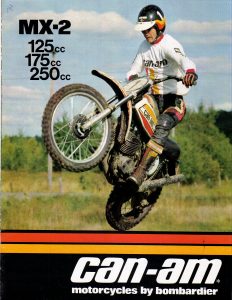
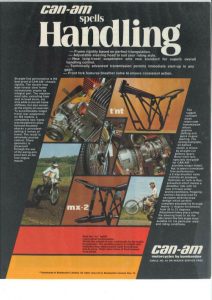
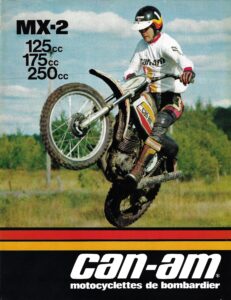
MX 2
| Year | Frame No | Bike Reference | No's Produced | Rotax Engine | Gearbox |
| 1975 Models | 5844 | 125 MX-2 | 1000 - 2000 | 124 short stroke oil injected | 6 speed close ratio |
| 5854 | 175 MX-2 | 1000 - 2000 | 174 short stroke oil injected | 6 speed close ratio | |
| 5864 | 250 MX-2 | 1000 - 2000 | 244 short stroke oil injected | 5 speed close ratio |
1975 in can-am updated the MX line up with three new models 125,175 and 250
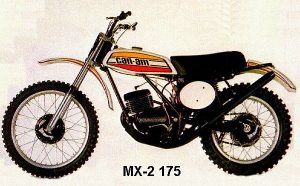

GP 250
1975 also saw the launch of the 250 GP, a factory race replica of Gary Jone's race bike
| Year | Frame No | Bike Reference | No's Produced | Rotax Engine | Gearbox |
| 1975 Models | 5860 | 250 GP | circa 250 | 244 short stroke oil injected | 5 speed close ratio |

A set of Factory Drawings, showing the modifications made to the standard MX 250.

Can-am also produced plans on how to fit the Honda CR125M ignition to the GP.

MX 3
| Year | Frame No | Bike Reference | No's Produced | Rotax Engine | Gearbox |
| 1977 Models | 7844 | 125 MX-3 | ??????? | listed in Bombardier archives, but not officially produced | |
| 7854 | 175 MX-3 | circa 250 | 174 short stroke oil injected | 6 speed close ratio | |
| 7864 | 250 MX-3 | 1000 - 1500 | 244 short stroke oil injected | 5 speed close ratio |
1977 saw the launch of the MX3, the legendary Black Widow

MX 4
| Year | Frame No | Bike Reference | No's Produced | Rotax Engine | Gearbox |
| 1978 Models | 8840 | 125 MX-4 | circa 250 | 174 long stroke premix | 6 speed close ratio |
| 8864 | 250 MX-4 | 1000 - 1500 | 244 long stroke premix | 5 speed close ratio | |
| 8884 | 370 MX-4 | 500 - 750 | 366 premix | 5 speed close ratio |
1978 the MX model was updated with the new long stroke premix motor, doing away with the oil injection pump and oil reservoir.


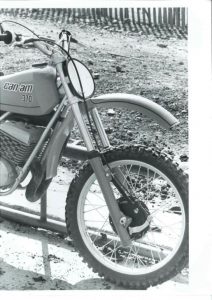
MX4 Factory Photos
Prototype MX4 370 showing a very early prototype 370 engine that includes a number of detail differences from the production engine
MX 5
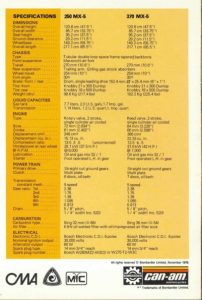
| Year | Frame No | Bike Reference | No's Produced | Rotax Engine | Gearbox |
| 1979 Models | 8944 | 125 MX-5 | ????? | 174 long stroke premix | 6 speed close ratio |
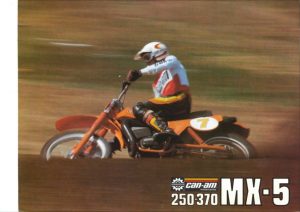
| 8964 | 250 MX-5 | 1000 - 1500 | 244 long stroke premix | 5 speed close ratio | |
| 8984 | 370 MX-5 | circa 500 | 366 premix | 5 speed close ratio |

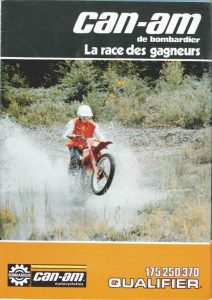

MX 6
| Year | Frame No | Bike Reference | No's Produced | Rotax Engine | Gearbox |
| 1980 Models | 8044 | 125 MX-6 | 750 - 1000 | 124 long stroke premix | 6 speed close ratio |
| 8064 | 250 MX-6 - S&W Shocks | 750 - 1000 | 244 long stroke premix | 5 speed close ratio | |
| 8084 | 400 MX-6 - S&W Shocks | 500 - 750 | 398 premix | 5 speed close ratio |


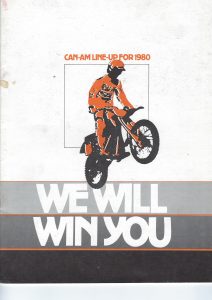
MX6B
| Year | Frame No | Bike Reference | No's Produced | Rotax Engine | Gearbox |
| 1981 Models | 8401 | 250 MX-6B - Ohlins Shocks | 500 - 750 | 244 long stroke premix | 5 speed close ratio |
| 8402 | 400 MX-6B - Ohlins Shocks | 500 - 750 | 398 long stroke premix | 5 speed close ratio |
Late in 1980, the MX6 was upgraded with Ohlins shocks and an allow swing arm